Built from more than a decade of web-to-print experienceAbout Total Print Hub
For real print shops

From a one-person shop to a multi-stage production team.

Total Print Hub is built for businesses selling DTF transfers, decorated apparel, signs, stickers, patches, drinkware, promotional products, and other custom goods through Shopify or WooCommerce.

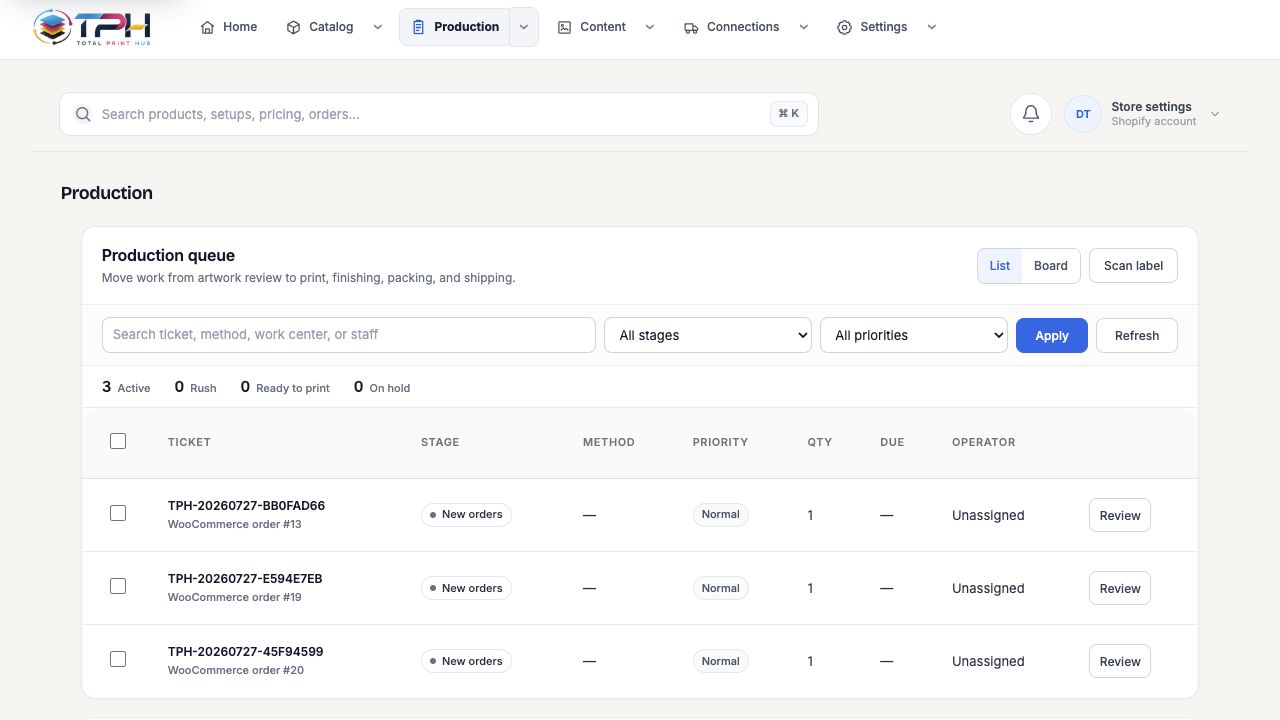
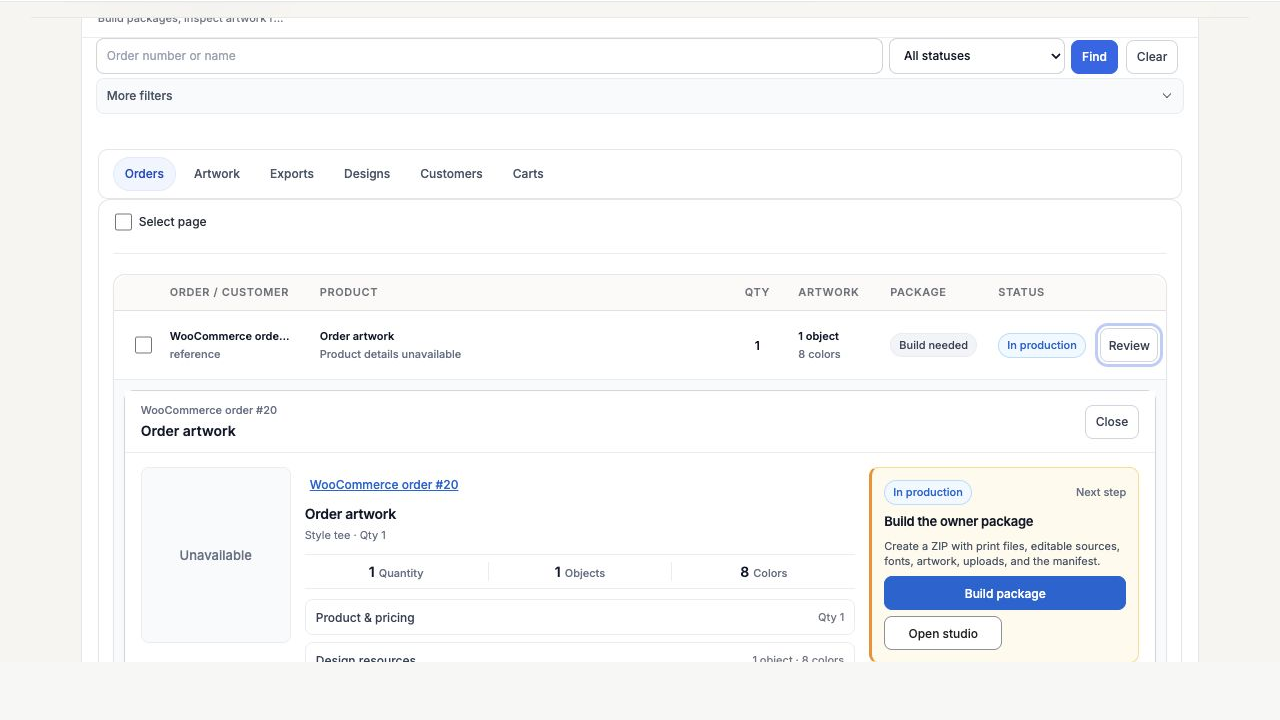
The real Total Print Hub production order workspace used to review artwork and build owner production packages
Connected workflowBuilt for daily production
Simple starting pathAdvanced method controlsProduction-ready ordersShopify or WooCommerce
One product, many print methods

The workflow adapts to the job without teaching every user the whole system.

A small shop can begin with prepared defaults. A growing team can add method-aware pricing, roles, queues, production stages, suppliers, and audit history without changing the customer experience.

Print shop workflow · Order resources Actual running interface
The real Total Print Hub production order workspace used by a print shop
Captured from the isolated Total Print Hub demonstration tenant—not a rendered placeholder.
Simple to start, deep when needed

The workflow grows with the shop instead of burying it.

A garage shop gets a guided starting path. A larger operation gets pricing rules, supplier workflows, order resources, production stages, scanning, and audit history without exposing every control to every person.

One commerce-connected recordPrivate merchant data boundaryEditable production evidence
01

Start small without staying limited

A garage shop should be able to launch without understanding a pricing engine or configuring every product by hand.

  • Prepared starter products and editable print templates
  • Simple pricing defaults and guided Shopify or WooCommerce setup
  • Product Studio, Gang Sheet Builder, or both
02

Run an active production floor

A growing team needs method controls, order resources, queues, ownership, and clear handoff.

  • DTF, DTG, screen print, embroidery, vinyl, sublimation, and named methods
  • Artwork review, print files, stages, assignments, QC, reprints, and remakes
  • Supplier catalog mapping, inventory signals, and controlled integrations
03

Keep the customer path short

Customers should design the product—not learn your production software.

  • Product-specific sides, colors, variants, and safe areas
  • Visible primary actions with specialist tools nearby
  • Live pricing, save, quote, checkout, and My Designs

The outcome

The software grows in depth without making every new employee or customer carry that complexity.

Common tasks remain fast and obvious. Specialist controls appear where the product, print method, or production role needs them.

Shopify or WooCommerce